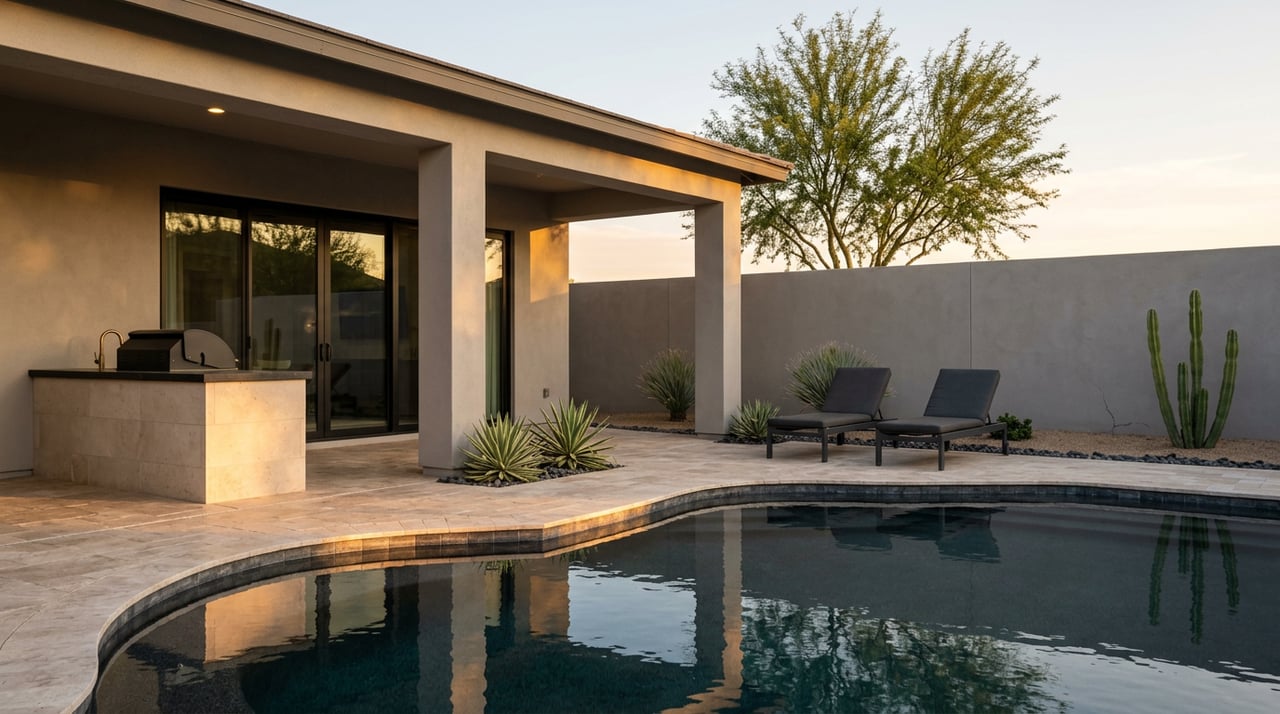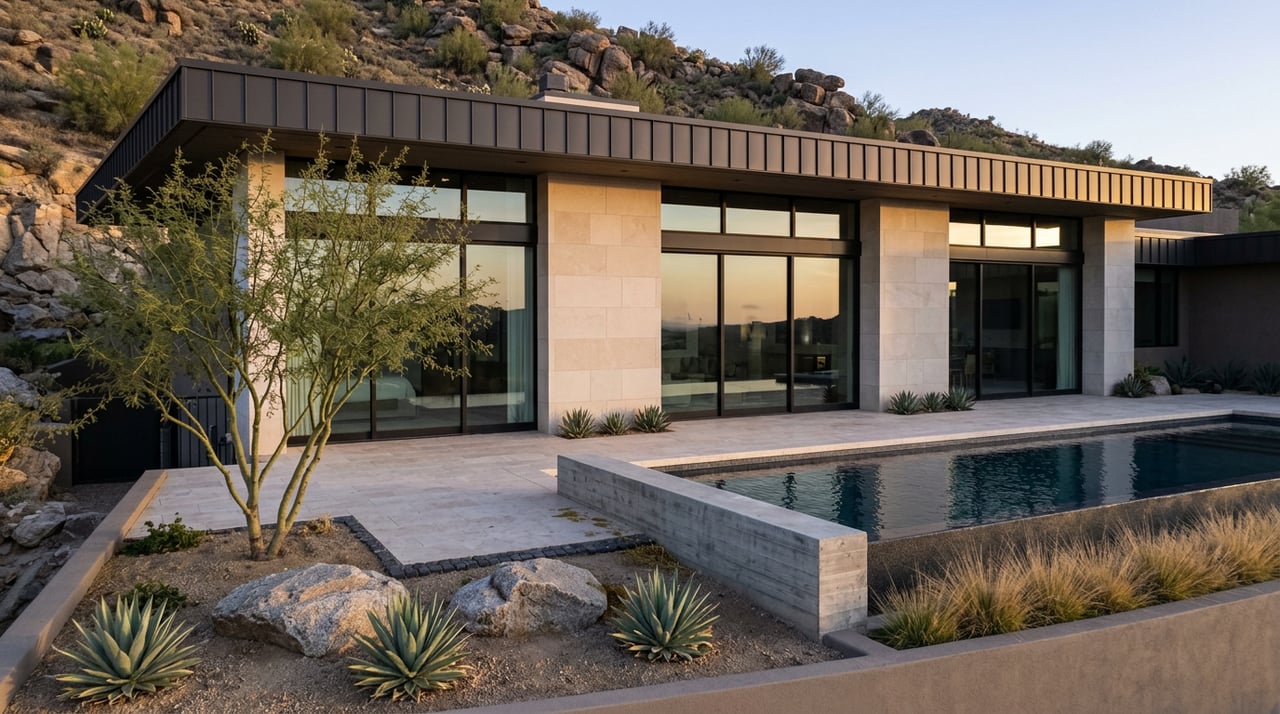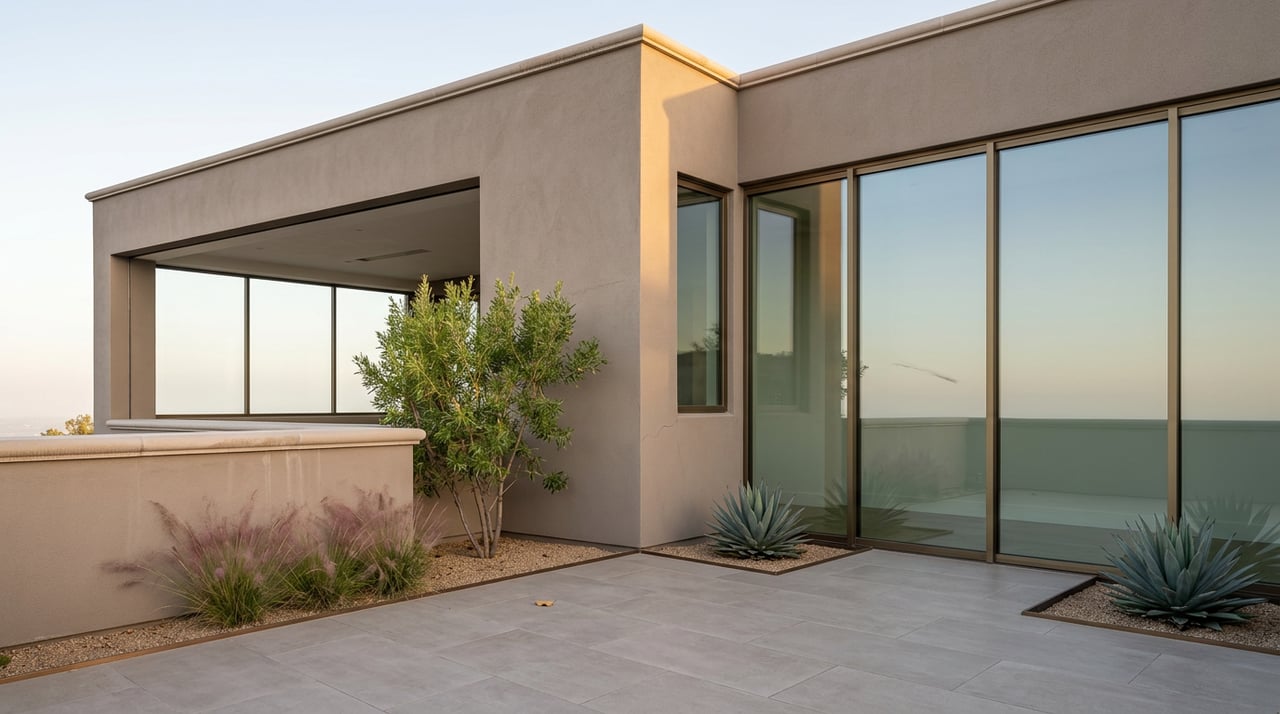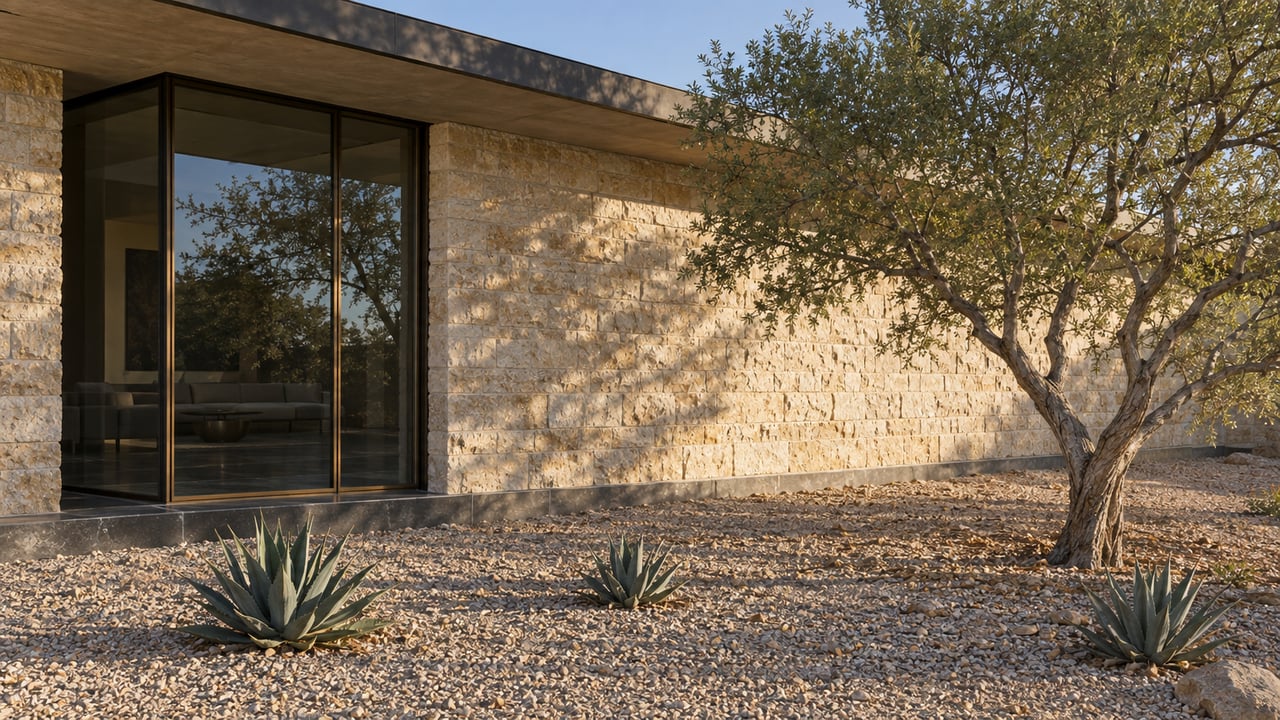
In April 2026, Las Vegas Review-Journal reporting confirmed that Raiders owner Mark Davis had closed on four adjacent homesites in Ascaya for $38.75 million, adding to the parcel he bought there in 2020 for $6 million, where he has since built a roughly 15,000 square foot home reportedly styled after the team's Henderson practice facility. One buyer, one signature, four lots gone from the count in a single transaction.
That transaction landed in the same stretch of 2026 that most current market guides use to describe Ascaya's scarcity: lot inventory falling from 142 available parcels in January 2024 to 64 remaining as of March 2026, a 55 percent reduction in 26 months. Every write-up treats that decline as proof of runaway demand. It's a fair reading of the headline number. It's an incomplete reading of what's producing it.
The number everyone is quoting
Ascaya was planned for 313 custom homesites across roughly 660 acres of the McCullough Range, and the lot count has been the community's most repeated statistic since the project reopened after the recession. As of March 2026, 64 of those original lots remain unsold. At the pace inventory has moved, the community is projected to reach full sell-out somewhere between mid-2027 and early 2028.
Q1 2026 closed sales give some shape to what that inventory is worth. Lot-only transactions averaged $2.1 million, ranging from $1.2 million to $4.4 million depending on elevation and view quality. Completed homes averaged $7.8 million, with a spread from $4.1 million to $24 million, and sat on market an average of 198 days from list to close. Lots at the highest elevation tiers, with full Strip frontage and minimal grading required, traded at the top of the price band and often drew multiple offers within 30 days. Lower lots with partial view obstructions moved in the $1.2 million to $1.8 million range with far less competition.
Those numbers are real. What they don't show is who is actually buying, and that turns out to matter more than the count itself.
What the count hides
Ascaya's remaining inventory didn't disappear one household at a time. A meaningful share of it disappeared in blocks, purchased by a small number of buyers with the capital to acquire multiple parcels at once and no urgency to build immediately. Once a lot sells, it exits the "available" column whether the buyer breaks ground next month or in three years. Custom builds at Ascaya run 18 to 36 months from Architectural Review Committee approval to completion, so a purchased lot can sit visually untouched, generating no listing activity, no open house traffic, no resale comps, while still counting as part of the 78-lot drawdown that everyone cites as evidence of overwhelming demand.
This is the distinction that gets lost when a shrinking lot count gets treated as a straightforward supply-and-demand story. A market where 78 individual buyers each bought one lot looks identical, on paper, to a market where a dozen buyers bought six lots apiece. The count falls the same amount either way. But the competitive picture a new buyer faces is completely different depending on which version is true, and Ascaya's own transaction history, including a single April 2026 purchase that accounted for four lots at once, shows that the second version is part of the picture.
Why cash removes the usual brake
There's a second layer to this that shows up in a 2025 Review-Journal interview with Ascaya development lead Sam Brown, conducted as the project released its final Cloud Rock Collection homesites. Brown described most Ascaya buyers as either paying cash outright or choosing to finance as a preference rather than a necessity. He noted that a five-point swing in mortgage rates, the kind of move that reshapes demand across most of the Las Vegas market, doesn't function as a brake on Ascaya buyers the way it does elsewhere. What moves this buyer pool is closer to how flush people feel after a strong run in equities than what a 30-year note costs them.
That detail explains why the usual rhythm of a luxury market, where rising rates slow absorption and falling rates accelerate it, doesn't map cleanly onto Ascaya. The lots that disappeared between January 2024 and March 2026 didn't disappear because financing got easier. They disappeared because a narrow band of ultra-wealthy buyers had the liquidity to act regardless of what rates were doing, and when a handful of buyers in that position decide to acquire multiple parcels at once, as Davis did, the effect on the published lot count looks identical to broad-based demand even though it's coming from a fraction of the buyer pool.
What this means depending on what you're actually buying
For a buyer evaluating Ascaya against other Henderson enclaves, the practical question isn't "how many lots are left." It's "which tier am I competing for, and against whom."
| Product | Q1 2026 price range | Competitive dynamic |
|---|---|---|
| Standard elevation lots | $1.2M – $1.8M | Slower moving, less concentrated buyer interest |
| Premium Strip-view lots | Up to $4.4M | Multiple offers within 30 days, most exposed to concentrated buys |
| Completed custom homes | $4.1M – $24M (avg. $7.8M) | 198 days average on market, priced above lot-plus-build cost |
| The Canyon at Ascaya (Blue Heron) | From roughly $2.9M | Built lock-and-leave product, no ARC timeline to wait through |
A buyer chasing a premium view lot is competing in the segment most likely to attract the kind of buyer who purchases in multiples, which is also the segment where the 30-day multiple-offer pattern shows up most often. A buyer willing to take a standard elevation lot, or to skip raw land entirely, is operating in a different market with a different clock.
That last option matters more than most guides give it credit for. Blue Heron's Canyon Residences at Ascaya, a 51-home lock-and-leave enclave with wellness amenities including multiple pools and dedicated yoga and meditation spaces, offers a path into the community without the two to three year design-and-build process that raw lots require. It's a different product, priced from roughly $2.9 million, but for a buyer weighing Ascaya against other Henderson communities on a shorter timeline, it sidesteps the exact mechanism driving the scarcity headline: it's already built, so it isn't subject to the multi-year gap between purchase and occupancy that lets concentrated lot buys sit invisible in the market for years.
Reading the sell-out projection correctly
The mid-2027 to early-2028 sell-out estimate assumes the current pace of absorption continues in a straight line. That assumption holds only if the remaining 64 lots keep moving the way the last 78 did, through a mix of individual buyers and occasional concentrated purchases from buyers with the means to act on more than one parcel at a time. If another buyer with Davis's capacity enters the market and acquires several lots in one transaction, the count could fall faster than the projection suggests without reflecting any broader shift in demand. If the remaining lower-tier lots move more slowly than the premium ones did, sell-out could stretch past early 2028 even as the premium tier appears fully absorbed.
Either way, the number itself isn't the whole story. A buyer comparing Ascaya to MacDonald Highlands, Southern Highlands, or The Ridges should be asking which tier of Ascaya inventory they're actually positioned to compete for, not treating 64 as a single, uniform figure counting down to zero.
Understanding which segment of Ascaya's remaining inventory fits a specific timeline and budget, and how that segment has actually been trading rather than how the headline count suggests, is the kind of detail worth working through before making an offer. Joey Andron can walk through the current lot and resale picture at Ascaya and help figure out which path fits.